Industry
Tool Kits for Aviation Training Schools
Student kits sized to the syllabus, and workshop tool control that teaches the habit rather than mentioning it in a lecture.
A training school has two tool problems that pull in opposite directions. Students need to learn tool accountability as a habit, which argues for strict control. And thirty students need to be working at once on equipment a school has to afford, which argues for practicality.
The student kit
Most kits marketed at students are sold on piece count, and piece count is the wrong measure for somebody who owns no tools and is about to be shown what each one is for. A first kit should cover the syllabus for the first year and not much beyond it, because a tool a student cannot yet use is a tool they will lose before they can.
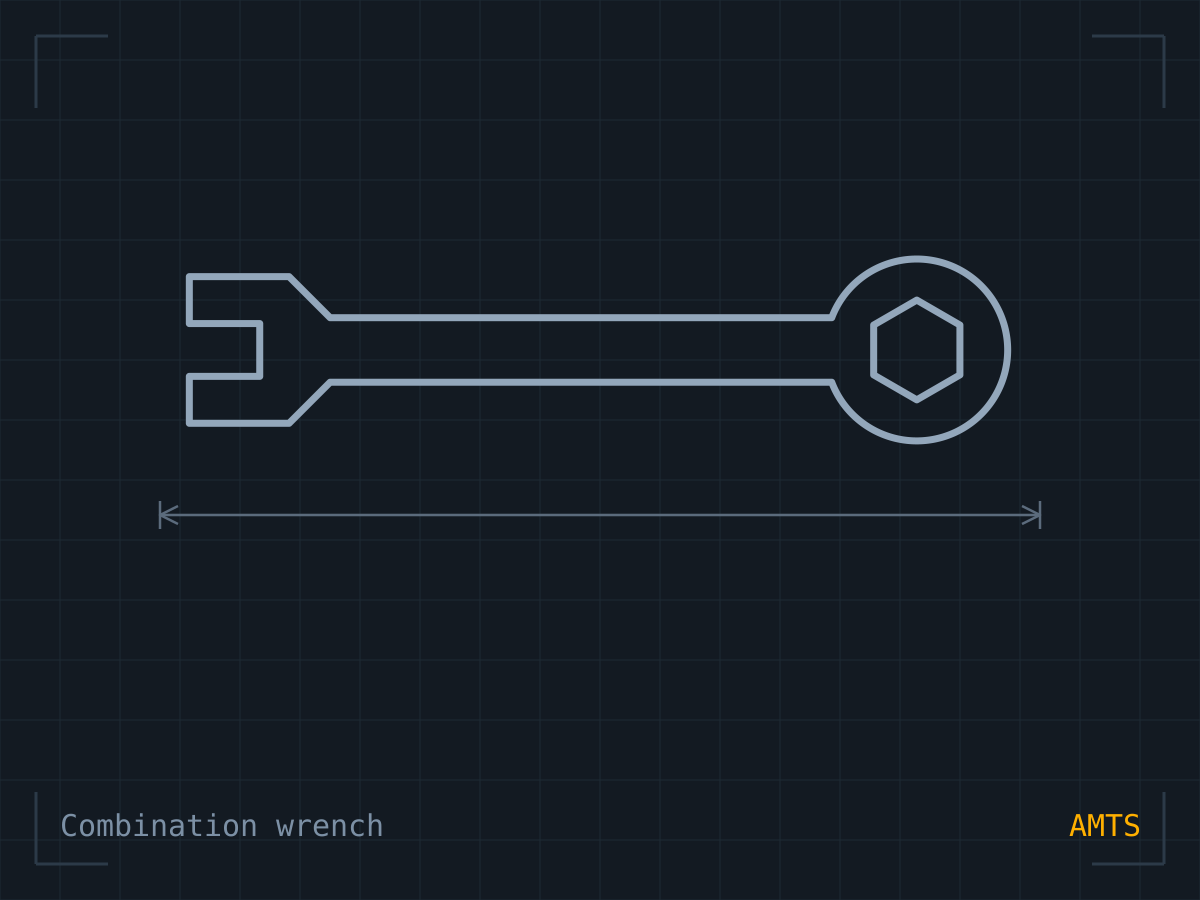
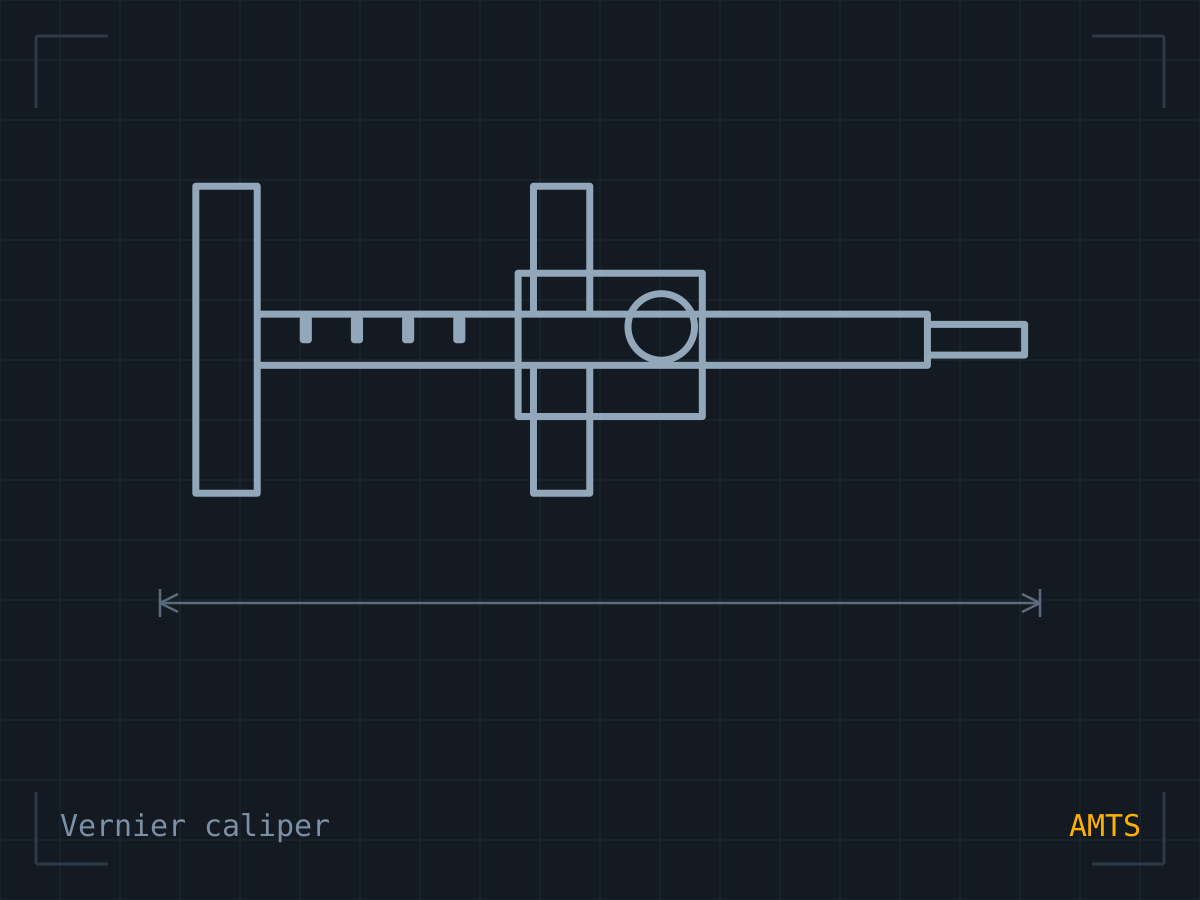
What we would put in it: combination spanners and sockets in the sizes the airframes in your workshop actually use, screwdrivers including the cross point sizes aviation fasteners use, pliers, safety wire pliers, a rivet gauge, basic measuring, and the sheet metal basics if the syllabus includes structures in year one.
What we would leave out: specialist test equipment, torque wrenches above the range a student will be trusted with unsupervised, and anything requiring calibration control that a student cannot maintain.
Teaching tool control by making it unavoidable
This is the part where a school can do something no employer can, which is to build the habit before there is anything to unlearn.
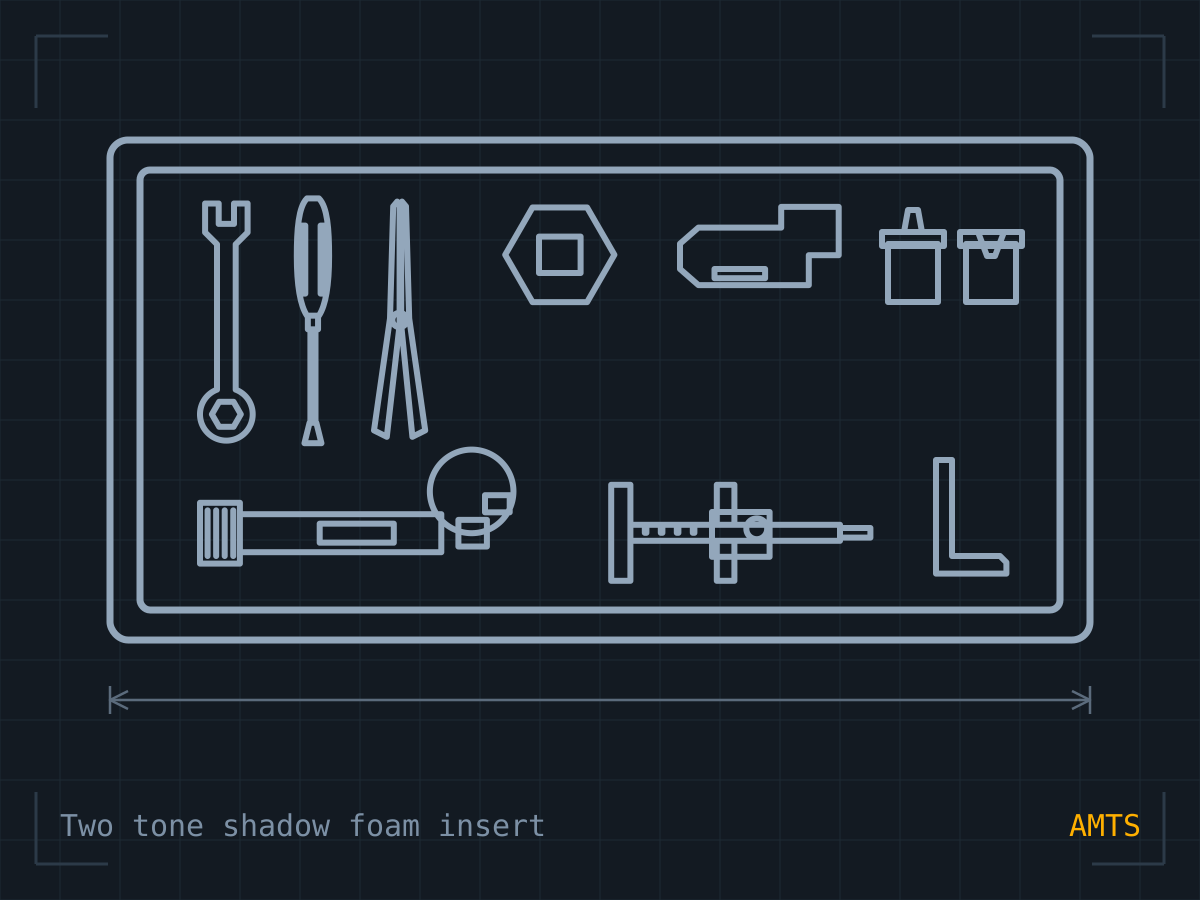
Shadow the student kits. If a student's own case has cut pockets, the missing tool is visible to them, to the instructor and to the person marking the practical. Nobody has to be told to check: the check is looking at the case. Numbered pockets add the discipline of matching a gap to a list.
Etch identification from day one. A student number on every tool means a tool found in a workshop goes back to a person, and it makes accountability concrete in a way that a lecture on FOD does not.
Run the workshop crib the way a hangar runs one. Issue and return, a register, recall dates on anything that measures. Students who have used a real control system arrive at their first job already knowing why it exists.
What schools ask us about most
Budget across a cohort. Kits for a whole intake are the case where bulk pricing matters most, and where a repeated foam layout is cheapest, because it is drawn once and cut many times. Tell us the cohort size and the intake schedule.
Wear and replacement. Student tools have a hard life. It is worth planning replacement of the three or four items that always break rather than buying a premium kit and hoping. We will tell you which those are for the kit you are specifying.
Kit ownership. Whether kits belong to the student or to the school changes the marking scheme and the control model. Both work, and they are not the same job.
A note on what this does not make you
Supplying tools to a training organisation is not an endorsement of a syllabus and it says nothing about approval status. We are not an approved training organisation and we do not assess or certify students or courses. If a tool list is dictated by your approval, send it and we will build to it.
Questions from buyers like you
Do you supply kits for a whole cohort?
Yes, and it is the case where bulk pricing and a repeated foam layout are most effective, because the layout is drawn once. Tell us the cohort size and the intake schedule.
Can student kits be shadowed and marked?
Yes, and we would recommend it for a training environment specifically. A cut pocket makes a missing tool visible to the student and to whoever is marking the practical, which teaches the habit rather than describing it.
What should a first year student kit contain?
The syllabus for the first year and not much more. Spanners and sockets in the sizes your workshop airframes use, aviation cross point screwdrivers, pliers, safety wire pliers, a rivet gauge and basic measuring. A tool a student cannot yet use is a tool they will lose first.
Can we put student numbers on the tools?
Yes. Etched student or asset numbers, and we can work through a numbering range for a whole intake in one batch.
Are you an approved training organisation?
No. We supply tools and tool control, and we do not assess, certify or endorse courses or students. If your approval dictates a tool list, send it and we build to it.