Solution
Laser Tool Marking and Serialisation
Permanent tool identification, serial numbers and 2D barcodes, etched rather than printed, so the marking outlasts the tool control programme that ordered it.
A control register only works if the row and the object are reliably the same thing. A printed label in a hangar is not that link: it comes off, it goes illegible, and the tool becomes anonymous at the exact moment somebody needs to prove where it is. Etched marking is permanent.
What can be marked
A shop or organisation number, so a tool found on an apron can be returned and a tool found in an aircraft can be traced to an owner.
A serial number, unique per tool, which is what turns a count into an inventory. Two identical spanners with distinct serials can be told apart, and a control register can record which of them is in which box.
A 2D barcode or QR code, for scanning in and out. Barcodes have largely displaced the older practice of reading a stamped number, simply because scanning removes the transcription error, and a data matrix survives at a much smaller size than printed text.
A kit identity, where tools belong to a kit issued as one item, so a tool that turns up loose can be put back where it came from.
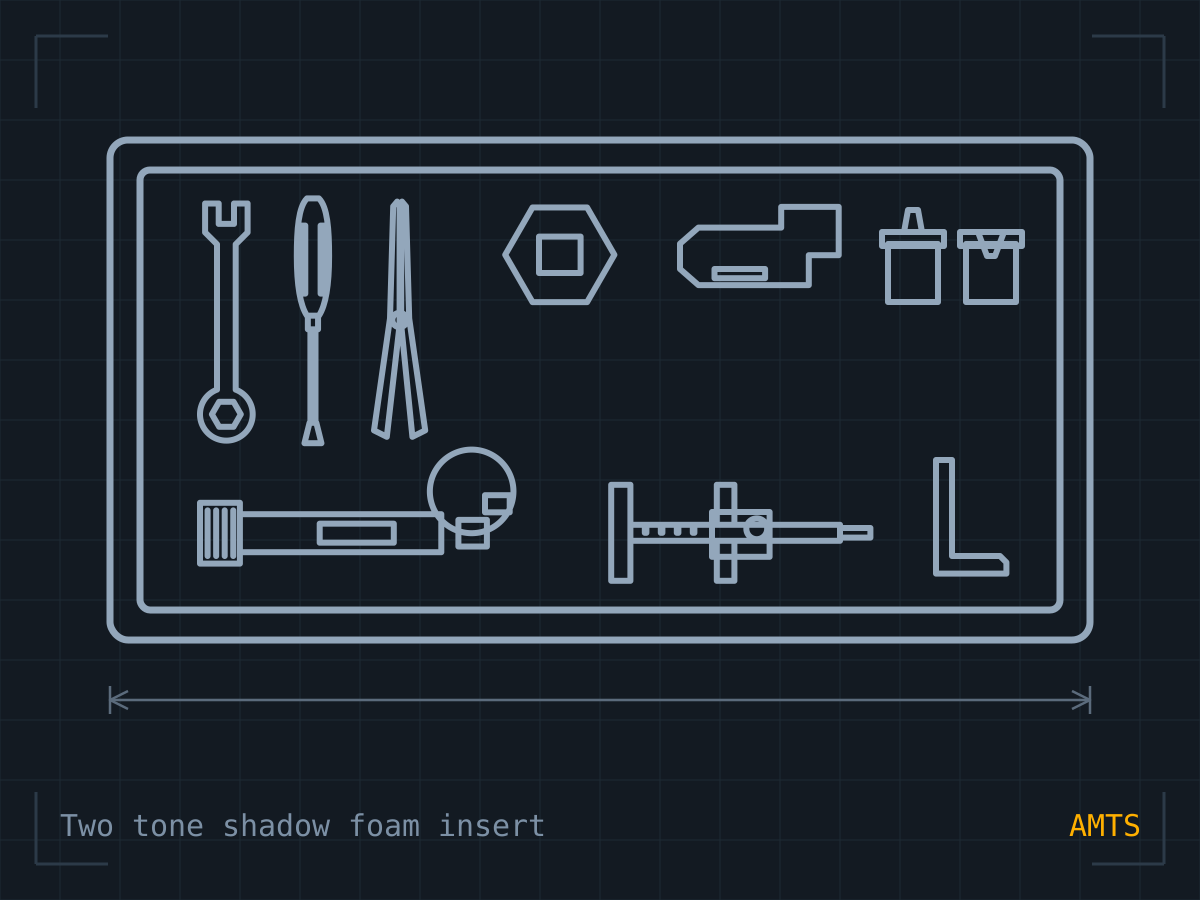
Marking is normally combined with foam, because the two solve different halves of the same problem: the foam tells you something is missing, and the marking tells you what and whose.
Etched, not printed
Laser marking removes or alters the surface rather than adding a layer to it. On anodised aluminium the anodising is ablated to leave a permanent light mark. On steel the surface is annealed to a dark, corrosion stable mark with no material removed.
That distinction matters for tools under load. Anything that cuts into the surface introduces a stress concentration, so on a shank, a jaw or a drive there is a right place and a wrong place to mark, and a right depth. Marking is placed away from stressed sections and away from measuring surfaces. On a torque wrench, marking never goes on the scale or the drive.
Your tools or ours
On tools we supply. Marking happens before the kit ships, so the kit arrives complete and ready to enter your register. This is the cheaper route because the tools are already in front of us.
On tools you already own. Send the batch, and it is marked and returned. The lead time runs from arrival rather than from the order, because that is when we can start. Tell us how the tools are numbered now, because the usual requirement is to continue an existing sequence rather than start a new one.
What we need from you
- The scheme. Prefix, format and where the sequence currently sits. If there is no scheme yet, say so, and there is a conversation to have before anything is etched.
- What goes on each tool. Shop number only, or shop number plus serial, or serial plus a data matrix.
- Placement preference. We will tell you where marking is safe on each tool type, and you choose within that.
- The register. If marking has to line up with rows in an existing system, send the export and it is matched to it rather than sequenced independently.
The trend worth knowing about
Tool identification is moving from human readable marks to machine readable ones, and from optical marks to RFID for high value and high consequence tooling. Xerafy and others sell RFID tags for exactly this. RFID reads without line of sight, which is genuinely better for a sealed box or a tool crib gate, and it costs more per tool.
Our position, plainly: for most shops, etched marking plus two tone foam gets you the great majority of the benefit at a fraction of the cost, and the honest comparison is in the FOD prevention guide. If your risk case justifies RFID, we will say so rather than sell you the thing we happen to do.
What this service is not
Marking a tool is not a certification of it, and it is not a calibration. An etched serial proves identity, nothing more. Where a tool needs a calibration certificate, that is a separate matter covered in our calibration guide.
Questions we get asked
Will laser marking weaken the tool?
Not where it is placed correctly. Marking is kept away from stressed sections, measuring surfaces and drives, and on steel the process anneals the surface rather than cutting into it, so no material is removed. We will tell you where marking is safe on each tool type rather than mark wherever there is room.
Can you mark tools we already own?
Yes. Send the batch with the numbering scheme and where the sequence currently sits. The lead time counts from arrival of the tools.
Can you continue our existing numbering sequence?
Yes, and that is usually what is wanted. Send the current format and the last number issued, or an export of the register, and the marking continues from there.
Do you do 2D barcodes and QR codes?
Yes. A data matrix survives at a much smaller size than readable text and removes transcription errors when tools are booked in and out.
Is marking the same as calibration or certification?
No. An etched serial proves identity and nothing else. Calibration is a separate matter with separate paperwork, and we do not conflate the two.
Should we be using RFID instead?
Possibly, for high value or high consequence tooling, because RFID reads without line of sight. For most shops, etched marking plus two tone foam delivers most of the benefit for a fraction of the cost. We will give you the honest comparison rather than the one that suits us.