Industry
Tool Control for Commercial MRO
Part-145 organisations, where tool control is a compliance requirement with a paper trail rather than a housekeeping preference.
In a Part-145 organisation, tool control is not a tidiness initiative. Part-145.A.40 requires that tools and particularly test equipment are controlled and calibrated to an officially recognised standard, and the evidence for that lives in a register, a labelling scheme and a pile of certificates. Everything we supply is built to fit that, rather than to look impressive in a hangar photograph.
What an auditor is actually checking
Four things, in our experience of what gets asked first.
That a tooling control system exists and is described. Typically incoming inspection, a control register, an identification and labelling system, and ongoing serviceability monitoring. MOE chapters 2.5 and 2.6 are where this lives.
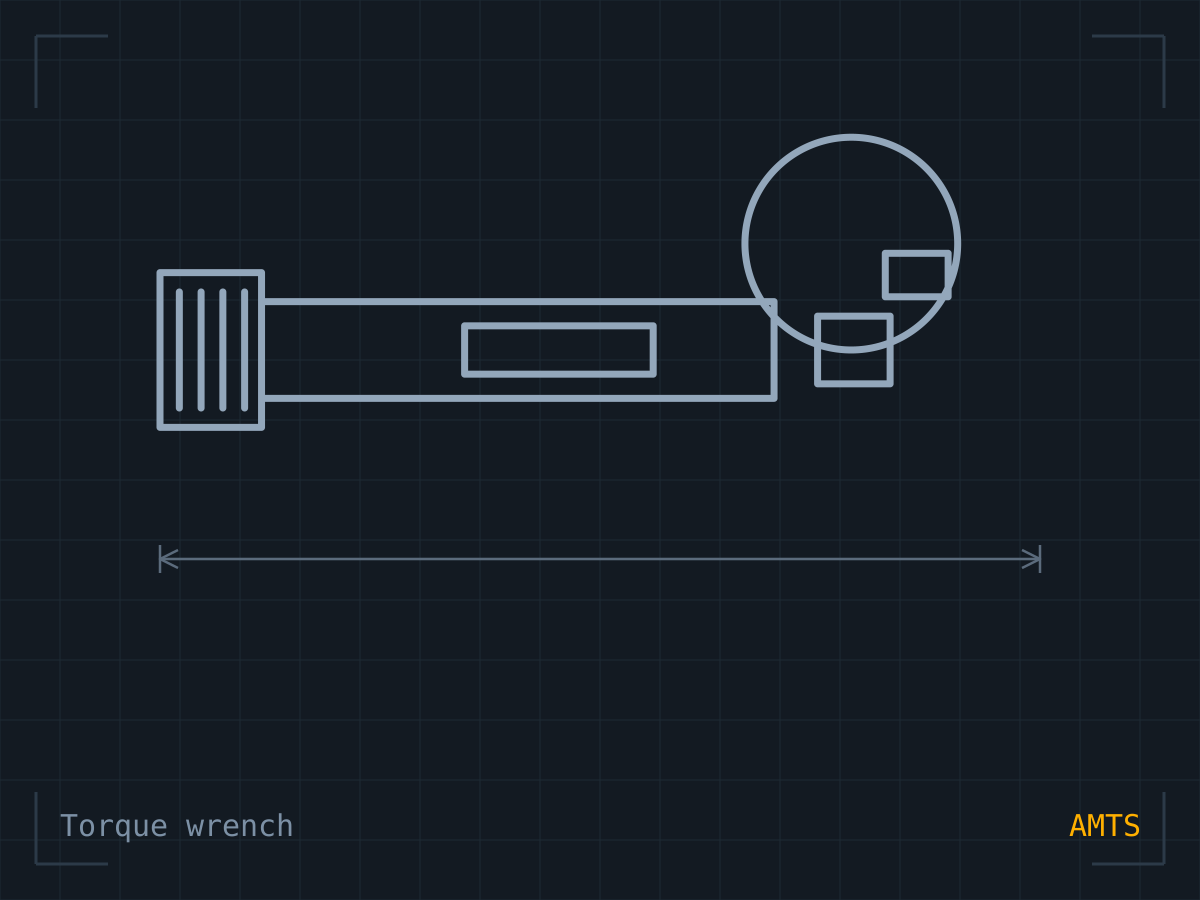
That every measuring item has a current certificate. Torque wrenches, multimeters, test sets. Where the manufacturer publishes no calibration recommendation, calibration follows ISO 10012, and it is done in a laboratory accredited to ISO/IEC 17025 by a body that is a signatory of the ILAC MRA. Non-accredited laboratories need the assigned inspector's acceptance and are expected to be kept to a minimum.
That a tooling evaluation happened. At initial approval or extension, and again each time a new tooling part number enters the organisation for the first time. That includes infrequently used, leased and loaned tooling, which is exactly where control breaks down, because those arrive outside the normal route.
That the labelling scheme is still being applied. Not that it was written, that it is being applied to tools that arrived last month.
The full version, with what each part means in practice, is in our EASA Part-145 tool control guide.
What we supply into that
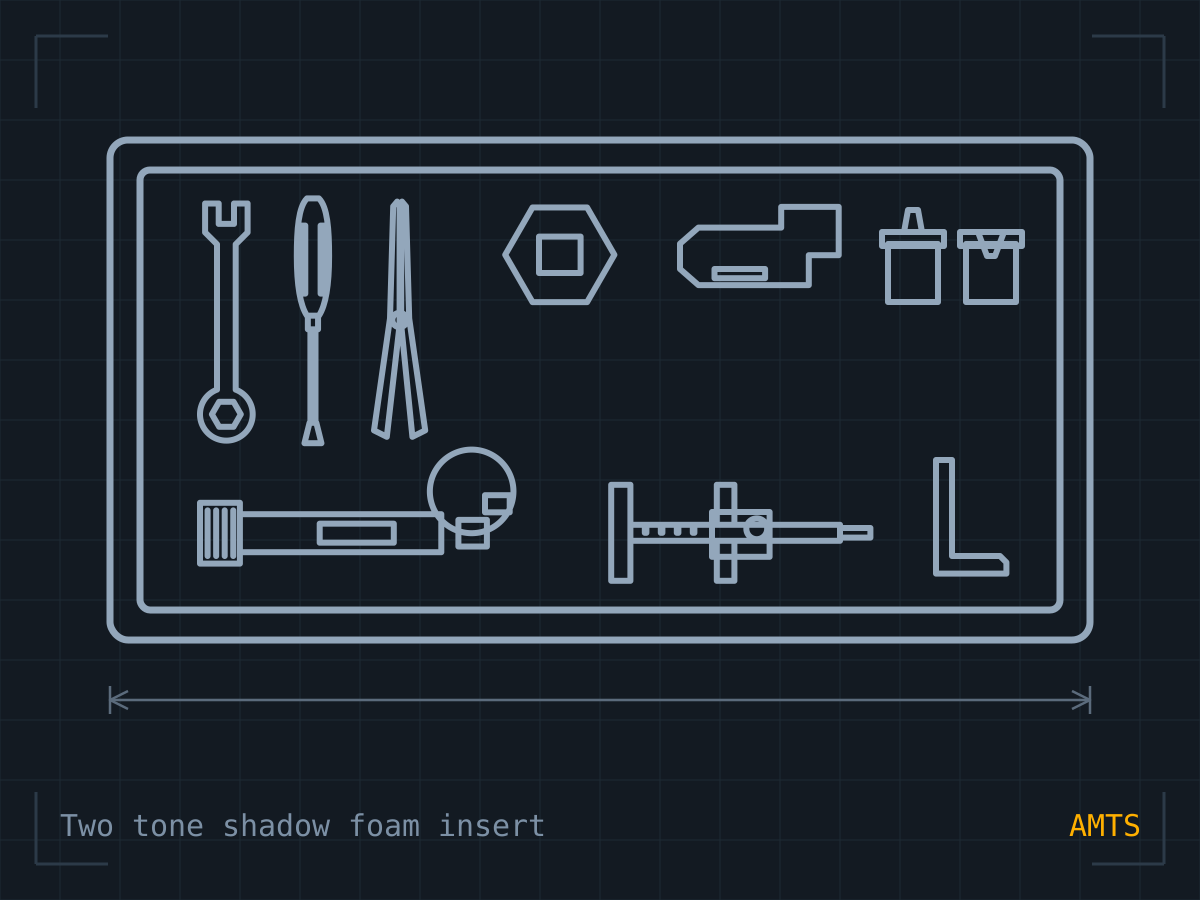
Two tone shadow foam, so a drawer can be checked by looking at it rather than by counting. That converts a shift end tool check from a task people skip into one they actually do, which is the difference between a control system on paper and one in use.
Etched identification and serialisation, so the register row and the object stay tied together. Printed labels in a hangar do not survive, and an unreadable label makes a controlled tool anonymous at the worst moment.
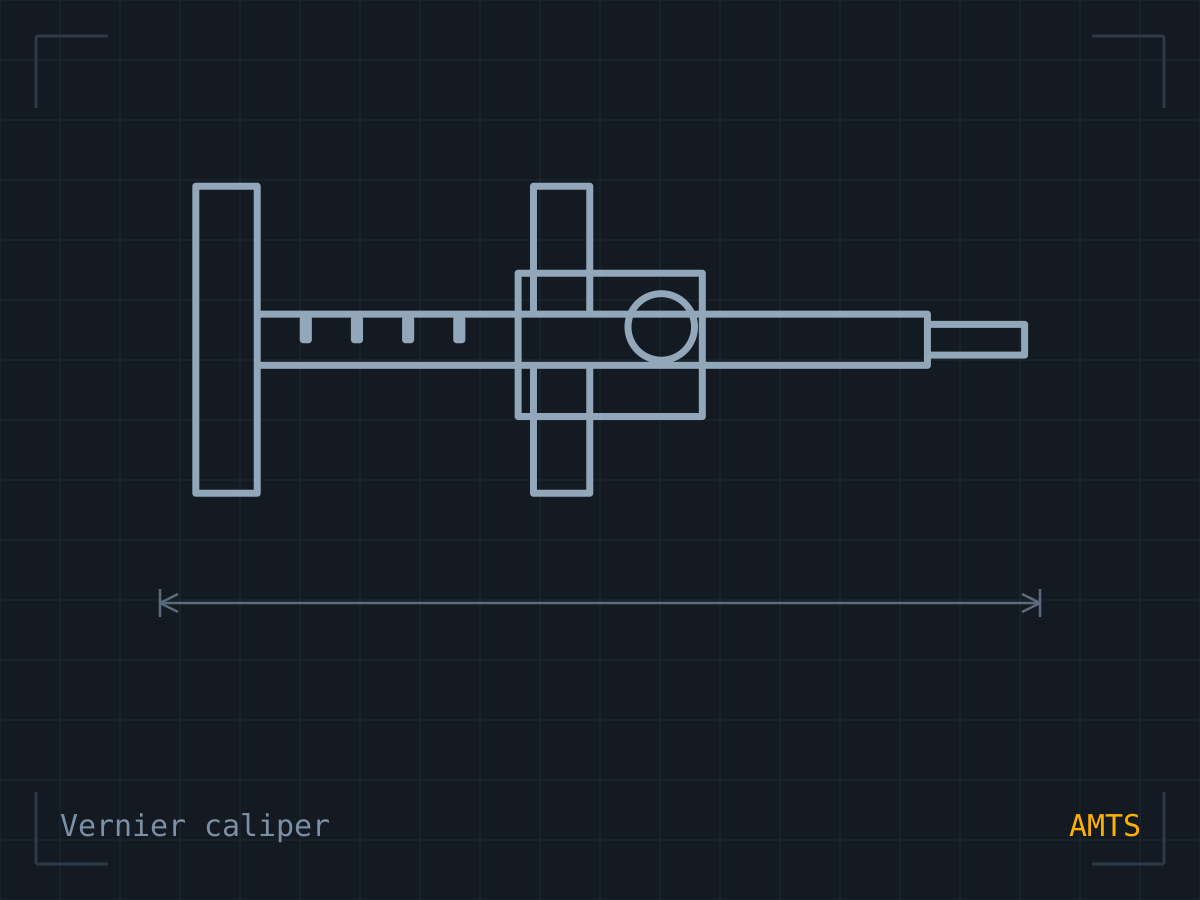
Calibrated measuring equipment with the certificate in the box, stating the laboratory, the standard and the date, so it can go straight into a controlled equipment register rather than sitting in a quarantine bin waiting for paperwork.
A tool crib audit that counts what you hold against what your register says, before somebody with an approval does it for you. See tool crib audit.
The supplier question, answered before you ask it
Performing calibration is not itself a Part-145 privilege. That means a tooling and calibration service provider is a supplier of services under your quality system, controlled by you, and it is your quality department that has to be satisfied rather than a regulator.
Which makes our own position relevant, so here it is plainly. We hold no quality management system certification that we can evidence today. No ISO 9001, no AS9100. If your approved supplier process requires one as a gate, we will not pass it yet, and it is better that you know that now than after a supplier questionnaire. When we hold one it will be published with its number.
What we can do is arrive with the paperwork in order for what we actually supply: certificates where certificates apply, a clear statement of what a marking service does and does not prove, and no compliance language we cannot back.
Why an EU supplier is worth a look
Almost every capable supplier in this segment is in the United States or the United Kingdom. For a European MRO that means an import, duty and a clearance fee payable before release, brokerage on top, and a lead time measured in weeks. Intra-EU supply avoids all of it. The arithmetic is on the shipping and lead times page.
Questions from buyers like you
Are you an approved Part-145 organisation?
No, and supplying tooling does not require it. Performing calibration is not a Part-145 privilege either, which is why a tooling service provider is a supplier of services under your quality system rather than an approval holder.
Are you ISO 9001 or AS9100 certified?
No, and we do not claim to be. If your approved supplier process requires it as a gate, raise it before spending time on a questionnaire. When a certification is held it will be published with its number and the certificate available on request.
Can you work to our MOE tool control chapter?
Yes. Send chapters 2.5 and 2.6, or the equivalent, with the enquiry. Layouts, labelling and serialisation are built to the customer procedure where one exists.
Do calibrated items come with a traceable certificate?
Yes, stating the laboratory, the standard and the date, so the item can enter your controlled equipment register without a wait for paperwork.
Who decides the calibration interval?
You do. The manufacturer recommendation is the starting point, and where none is published ISO 10012 is the usual reference. Our calibration guide sets out how that decision is normally justified to an auditor.
Can you handle leased and loaned tooling?
Yes, and it is worth asking about specifically, because that is where tooling control most often fails. Leased and infrequently used tools arrive outside the normal incoming inspection route and miss the evaluation step.